

Robots aren’t just coming, they are already here. While the world watches flashy demos, China and the U.S. are quietly racing to put humanoid robots to work. So who’s actually ahead when it comes to deployment?
What Exactly Is a Humanoid Robot?
Before getting into who’s ahead in humanoid robotics, let’s start by clarifying something important: what exactly is a humanoid robot? It’s easy to assume any robot in a factory qualifies but that’s not the case.
To be considered a humanoid, a robot generally includes:
- Bipedal locomotion (it walks on two legs)
- A torso and arms capable of multi-use manipulation
- A head or sensor suite for vision, speech, or orientation
- Human-task design, meaning it’s built to function in spaces designed for people (e.g., climbing stairs, using tools)
Examples of humanoid robots:
- Digit (Agility Robotics):

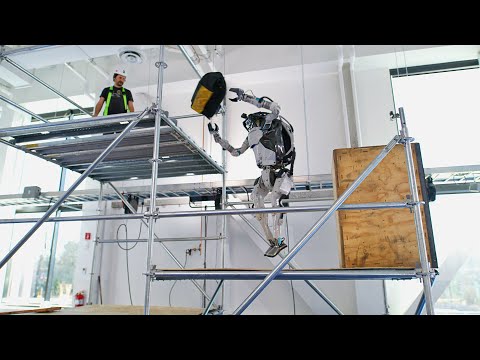
- Atlas (Boston Dynamics)
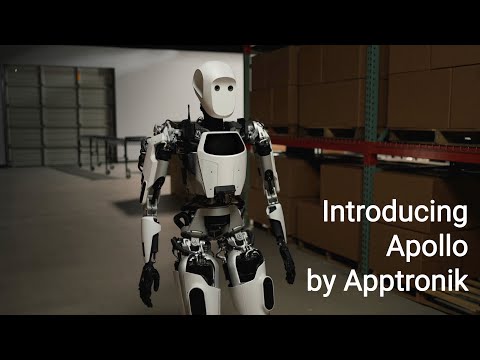
- Apollo (Apptronic)
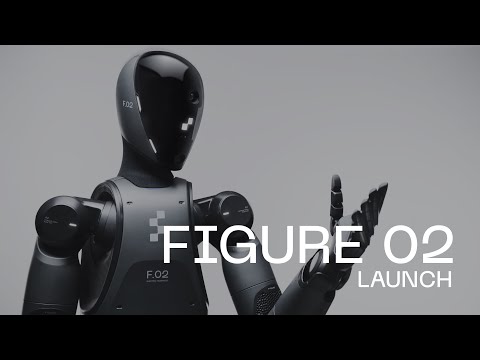
- Figure (Figure AI)
These are powerful and useful, but they don’t resemble or move like humans — they’re task-specific machines.
- GR-1 (Fourier Intelligence)

- Walker S1 (UBTech)

Where the Quiet Revolution Began
Something fascinating is unfolding in China right now — and it’s happening with very little fanfare. While much of the global tech world is focused on high-profile demos and product unveilings, Chinese companies are quietly deploying humanoid robots into real-world factory settings.
This post explores the reality of what’s happening — not hype, but facts. China’s quiet rise in robotics is part of a larger shift in how the world approaches AI-driven manufacturing. This isn’t about rooting for one country over another. It’s about helping readers understand where the technology truly stands and where it’s headed.
We’ll also take a fair look at what’s happening in the U.S., where more players than just Tesla are joining the race — and why perception doesn’t always match reality.
Who’s Building These Robots?
Several Chinese companies are deep in the humanoid robot game. Among the frontrunners:
- AgiBot: Known for its GO-1 foundation model, which lets robots learn by watching human videos. While real-world deployment isn’t fully documented, the AI enables robots to adapt dynamically to unstructured environments.
- MagicLab: Deployed its Xiaomai and MagicBot robots in retail, hospitality, and electronics manufacturing. Xiaomai assists in salons and dealerships, while MagicBot handles product inspection and materials movement on factory lines.
- UBTECH’s Walker S1: Real-world deployments include BYD (materials handling), Nio (quality inspections), FAW-Volkswagen (parts checks), and Zeekr (heavy lifting). It features semantic navigation and Baidu’s NLP engine.
- Unitree H1: The world’s fastest humanoid robot (3.3 m/s), piloted in logistics warehouses for inventory and material handling. Equipped with LiDAR and depth sensors for 360° awareness. You may have seen Unitree’s robots go viral for their synchronized dance performance at China’s 2025 Spring Festival Gala, where a group of H1 robots performed traditional moves alongside human dancers — showcasing not just agility, but cultural integration. Watch the video here:

- Kuavo (Leju Robotics): Integrated with Huawei’s HarmonyOS and tested at Nio’s EV plants for screw fastening and quality control. Works in both household and industrial settings, and connects via 5G.
Supporting factors:
- Government funding: China’s “Robotics+” Action Plan and city-level policies (e.g., Shenzhen, Beijing) provide subsidies and R&D incentives — up to 50–60% in some regions. (The Robot Report, China Daily)
- Labor pressures: Rising wages (5.8% YoY) and a shrinking workforce are pushing manufacturers toward automation. (China Briefing, Stanford CCEI)
- While exact pricing varies, Chinese humanoids like GR-1 are positioned as cost-effective for mass deployment. In contrast, U.S. models like Digit have been publicly estimated around $250K, making China’s scaling efforts more feasible. (The Robot Report, Agility Robotics)
What’s Actually Happening on the Factory Floor?
Right now, many of China’s humanoid robots are still being tested in controlled settings or specific factory trials. But companies like UBTECH, Fourier Intelligence, and MagicLab have already started using them in EV manufacturing, electronics assembly, and logistics. The goal isn’t to rebuild factories around robots—instead, they’re designing robots that can work alongside humans in existing spaces.
This includes lifting heavy components, sorting delicate materials, and navigating complex factory layouts. In some facilities, such as Zeekr, FAW-Volkswagen, and Foxconn, these robots support or complement human workers — an early sign of hybrid workforce models emerging across China.
Rather than a future vision, this trend is already taking shape, step by step — and faster than many realize.
The U.S. Enters the Humanoid Robot Race
While Tesla’s Optimus robot gets plenty of headlines, the U.S. humanoid robotics scene is broader than many think:
- Agility Robotics has deployed its humanoid robot, Digit, at a Spanx warehouse in Georgia. Digit carries bins and navigates warehouse floors — not just a demo, but real work.
- Boston Dynamics is rolling out its next-gen Atlas robot with plans for deployment at Hyundai’s U.S. factories.
- Figure AI is testing its humanoid robots at BMW’s South Carolina plant. These bots are built for general-purpose manufacturing.
- Apptronik has teamed up with Jabil to develop Apollo, a humanoid designed for industrial tasks in logistics and assembly.
To illustrate Tesla’s advancements, here’s a demonstration of the Optimus robot:

So yes — the U.S. is making progress, but it’s still early compared to China’s real factory deployments.
Other U.S.-based efforts, including research at Toyota Research Institute and Sanctuary AI (Canada), are showing promise — but they remain in early development or lab phases. For now, commercial deployment in the U.S. is still limited to a handful of key players.
Who’s Really Ahead?
Hype isn’t the same as progress. China’s humanoid robotics sector isn’t just moving quickly — it’s already ahead in practical, real-world use. Here’s a plain-English look at what’s different:
- Who’s already using them in real factories?
China is. Humanoid robots are already working full shifts in Chinese factories. In the U.S., most robots are still being tested or used in small pilots. - Who’s paying for it and pushing it forward?
China’s government is heavily involved — funding companies and building national plans to scale humanoid robots. In the U.S., it’s mostly private companies doing this on their own. - Who’s making the most robots now?
China is already scaling production and aiming for thousands of units by the end of 2025. U.S. companies are preparing to scale, but most aren’t there yet. - Who’s getting more attention?
The U.S. is. American companies are marketing, launching demos, and creating media buzz. China isn’t talking as loudly, but it’s building faster.
So, who’s ahead in deployment? Right now, China has the edge in factory rollouts and scaling.
This doesn’t mean one is better than the other — but it’s worth knowing where the action really is.
Why Perception Still Favors the U.S.
So why do so many global buyers still flock to U.S. tech?
- Brand Power: Names like Tesla and Boston Dynamics carry global weight, even if their robots aren’t fully deployed yet.
- Media Bias: Global tech media leans heavily English-language and Silicon Valley–centric.
- Geopolitics: Security, IP concerns, and trade restrictions push many buyers to default to U.S. or EU options.
- Ecosystem Compatibility: U.S. platforms often integrate better with global cloud and enterprise stacks.
What This Means for the World
- For manufacturers: Expect pressure to automate faster. Companies that adopt robots may become more competitive on cost and speed.
- For workers: Some repetitive jobs will be replaced, but new ones will emerge — like robot maintenance, AI supervision, and programming. The challenge is re-skilling people for these new roles.
- For countries and tech ecosystems: China’s model of centralized planning and government funding could inspire other countries to create similar national strategies for robotics.
When Will We Actually See These Robots in Everyday Life?
Right now, most humanoid robots are working quietly in factories or testing facilities. But when will we see them more widely across industries and in public life?
Here’s a realistic timeline:
- 2025–2026: You’ll hear more about humanoid robots in the news and see them in limited roles — especially in logistics and controlled factory settings in China and a few U.S. sites. These roles involve basic, repetitive tasks like sorting, moving materials, or assisting humans in hybrid workflows.
- 2027–2028: Robots will begin showing up in public-facing roles — like receptionists, store greeters, or airport guides. These applications are lower-risk and better suited for current capabilities, especially in Asia and environments like NEOM.
- 2029–2030: Humanoid robots will gain broader visibility — appearing in malls, retail, or even pilot household applications. However, their use in fully autonomous, complex manufacturing roles will still be limited. Most will continue supporting specific workflows, not replacing entire jobs.
Like smartphones, humanoid robots will appear gradually, then suddenly seem everywhere — just not doing everything.
It’s not science fiction — but it’s not next month either. Like smartphones, humanoid robots will start slowly and then suddenly feel like they’re everywhere.
Final Thoughts
As AI chatbots dominate headlines, China is testing humanoid robots in limited factory applications. Fourier Intelligence’s GR-1 moves components at an EV battery plant, while UBTech’s Walker X performs basic quality checks in electronics labs—all under close human supervision and in controlled environments. In the U.S., companies are piloting similar technologies, with growing momentum.
What matters now isn’t who makes the boldest claims or the flashiest demo. It’s who can deliver usable, scalable solutions. In the race to automate, real progress is being driven by those who move from prototype to production.
