
Imagine finding out that the novel you’ve been losing sleep over, with its layered characters and jaw-dropping twists, wasn’t written by an author tucked away in a cabin somewhere. Instead, it came from a sophisticated algorithm, crafting sentences and building worlds from a data center. This is AI generated content. Even the illustrations you admired for their lifelike detail were generated by AI, visualizing every character and setting with precision. To top it off, the book was recommended to you by an online platform that knows your reading preferences better than you might think.
This scenario isn’t far-fetched, it’s the reality of how technology is reshaping creativity. But it also stirs up a bigger conversation: Where does human imagination end, and machine efficiency begin? AI can churn out content that feels authentic, even deeply moving, yet it lacks the personal struggles, joys, and memories that fuel human creativity. On the other hand, it can streamline processes and even push creative boundaries in ways we hadn’t considered.
As AI keeps pushing the boundaries between human effort and machine output, it forces us to reconsider what it truly means to create, to dream up new ideas, and to form connections through art. Is creativity simply about combining and rearranging concepts in fresh ways, or does it stem from something uniquely human—an emotional depth or a lived experience that machines just can’t replicate?
AI vs. Human Writers: The New Frontier in Writing
If we think there is a battle between human AI vs. human writers now, I think we are mistaken. This is the only the beginning. According to Exploding Topics, 35% of businesses are currently using AI productivity tools for content creation. If you’re curious about the best tools available, be sure to check out our post on the Best AI Apps to Use for Free for more insights.
It’s pretty obvious now robots aren’t just a thing of the future; they’re already here, crafting sentences with remarkable precision. AI writing tools are only going to get better, and their role in creating content and beyond is bound to grow even more. If what we’re seeing now is impressive, just think about what these tools might accomplish a year from now.
Before you toss your notebook in the trash, let’s take a closer look and see if AI writing tools can really replace us human writers.
AI-Generated Content: From Basic Chatbots to Advanced Writers
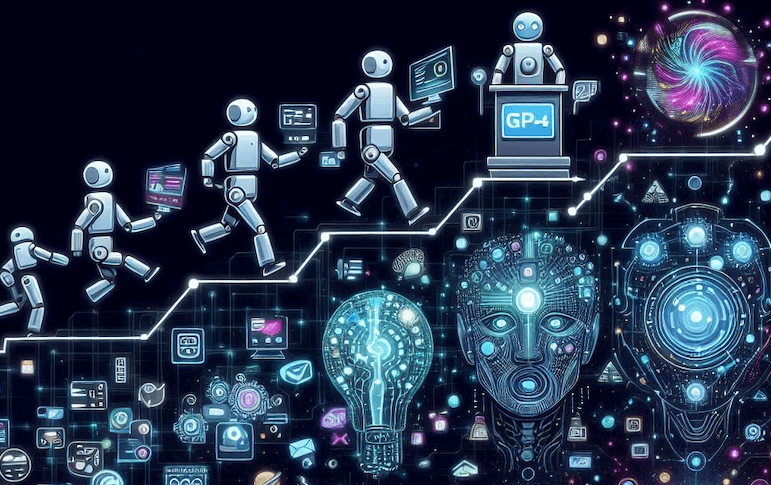
Chatbots when they first came out were frustrating, but they are getting better now with the advancement of AI. Before, you would end up frustrated, typing “agent, agent” because you just wanted to speak to a human. Well, those days may be gone soon.
Back in 2019, while working on a corporate project, I suggested using AI productivity tools to create proposals. At the time, it seemed like a far-fetched idea and was met with skepticism. I wasn’t even sure of the details myself, but after writing proposals for nearly a decade, I knew there had to be a better way.
We were still using basic spell-checkers and grammar tools, and though we had content-sharing systems, we didn’t have anything that could actually help us write. Since then, AI writing tools have rapidly evolved, and today we have advanced tools like GPT-4, Jasper, and Copy.ai that can generate everything from blog posts to poetry in a fraction of the time.
These digital experts are powered by intricate neural networks that have absorbed more text than you’d find in an entire library. They’ve taken in everything from Shakespeare’s sonnets to the fine print on shampoo bottles, and now they can churn out content in ways that are often impressively coherent and creative.
Strengths, Speed, Consistency, and Multilingual Magic

AI writing tools are much faster than humans. While it might take a human an hour to write one product description, AI can churn out several versions in just minutes. This doesn’t mean the AI’s work is always perfect, but it’s a good starting point. For first drafts or brainstorming, AI productivity tools speed things up a lot. Still, human writers are needed to review and polish the AI-generated content to make sure it’s accurate and high-quality.
Consistency? AI nails it every time. While a human writer might be moody before their coffee or distracted by a viral dog video, AI tools stay on point. Whether you need 10 articles or 10,000, they’ll produce them with the same tone and style, faster than you can say “content marketing strategy.
And let’s not forget their multilingual skills. While many of us struggle to order a coffee in a foreign language, AI writing tools switch between foreign languages like it’s nothing. Whether it’s English, Español, Français, or Arabic, these tools handle it all with ease, making global communication a breeze.
AI Writing Tools: Where They Fall Short
Before we get too excited about AI, let’s remember they still have limitations. Despite their impressive abilities, AI writing tools can sometimes struggle like an old sci-fi robot stuck on a simple task.
For instance, I once asked an AI to help me make tantanmen ramen without the meat. I told it what ingredients I had, and when I finally tasted the ramen, let’s just say it was more “experiment gone wrong” than “culinary masterpiece.” It was like the AI had tried to cook by just reading a recipe, but missed out on the fact that a good ramen needs more than just instructions—it needs a dash of human touch. And that’s the broader issue: AI writing tools can generate drafts quickly, but they don’t always deliver the depth or editorial nuance humans bring. That’s where AI grammar checkers bridge the gap between tools and human editors, offering context-aware corrections that polish AI drafts before they reach a reader.

Creativity and Original Ideas? That’s where AI vs. human writers becomes particularly evident. While AI writing tools can generate stories and creative content by remixing existing ideas in new ways, it doesn’t truly invent entirely original concepts from scratch. It excels at using what it’s learned from vast amounts of data but doesn’t create entirely new ideas on its own.
When it comes to understanding context and nuance, AI can generate well-structured responses but may miss important details. Its accuracy depends heavily on the data it’s trained on. If the data is biased or incomplete, the AI’s output will reflect those flaws, potentially leading to skewed or inaccurate results.
So, while AI can produce polished text, it might not always capture the full range of perspectives or provide perfect accuracy.
The Human Touch: What AI Can’t Replicate (Yet)

Here’s where we humans get to shine with our unique skills and understanding. While AI writing tools can churn out words quickly, there are some things we still do best when it comes to writing.
Take emotional intelligence, for example. We can tell the difference between being “excited” and “thrilled” in a way that fits perfectly with the situation. And crafting a genuine apology letter? That’s something we excel at, making sure it feels sincere rather than coming across like it was written by a very well-spoken machine.
Humans bring personal experiences, cultural insights, and emotional depth to our writing. We understand why a sunset might move us or why a story touches a particular chord with readers. Our ability to connect on a personal level comes from our own experiences and emotions, something AI can’t quite replicate. We weave narratives with a human touch because, well, we are human!
AI and Humans Together: Combining Technology and Creativity
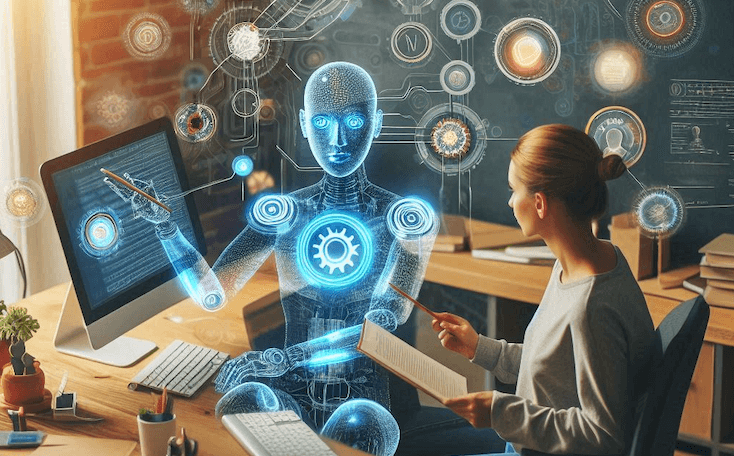
Imagine AI as your super-efficient, never-sleeping writing assistant. It can help brainstorm ideas, generate outlines, or even produce first drafts that you can then polish with your human touch. It’s like having a tireless intern who never asks for coffee breaks.
Many people—writers, content creators, proposal writers, and more—are using AI productivity tools to help with tasks like overcoming writer’s block, generating ideas, or managing routine work. These tools aren’t meant to replace humans but to assist and enhance their efforts. Plus, as they interact with you more, they get better at understanding your preferences and needs, making them even more effective.
AI-Generated Content vs. Human: Evolution, Not Extinction
As AI becomes more advanced in writing, the industry is evolving. Instead of replacing human writers, AI is changing the role they play.
Now, the emphasis is moving from just creating content to planning, editing, and adding a personal touch. Writers are taking on new roles as curators and editors, helping guide AI productivity tools to produce high-quality content.
Of course, this new world brings its own set of ethical challenges. Who owns AI-generated content? How do we prevent the spread of misinformation created by AI? These are important questions that need careful consideration.
The Road Ahead: Humans and AI, Co-Authors of Tomorrow
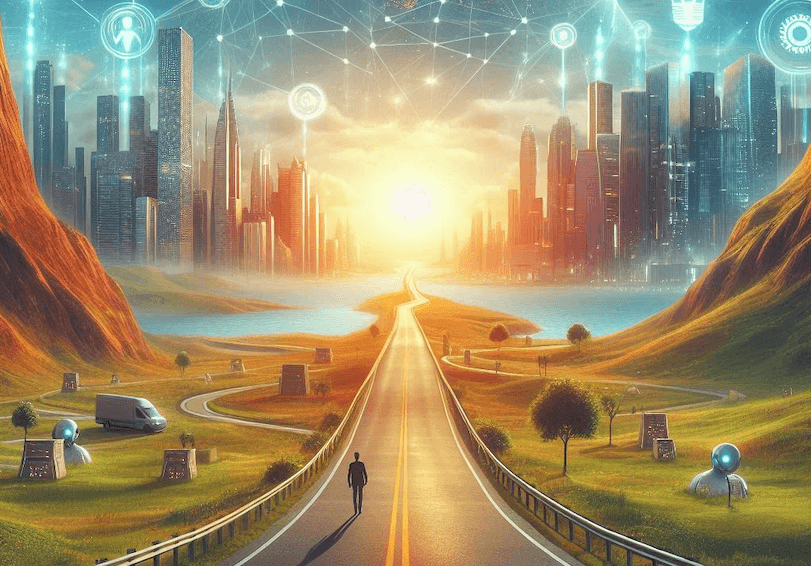
As we look to the future, the world of writing is set for a significant shift. Imagine a partnership where human creativity and AI efficiency come together to produce content that has a global impact.
On one hand, AI has the potential to revolutionize how we create content. It might grasp context like a seasoned journalist, craft stories with the flair of a bestselling author, and even generate humor that resonates. However, truly great humor, as well as experiences like traveling, eating, or feeling emotions deeply, are still areas where humans have the upper hand.
On the other hand, there are concerns about AI’s impact on jobs. As AI takes on more tasks, from drafting content to generating ideas, there’s a real possibility that it could displace some traditional roles in writing and content creation. While AI can handle data and produce drafts quickly, the human touch in strategy and creativity remains essential. The challenge is finding a balance where AI enhances our work without overshadowing the unique skills and experiences that humans bring to the table.
Ultimately, the future will likely involve a mix of both AI and human contributions. It’s about leveraging AI’s capabilities to improve efficiency while preserving the irreplaceable aspects of human creativity and insight.
The Verdict: AI vs. Human Writers – Better Together
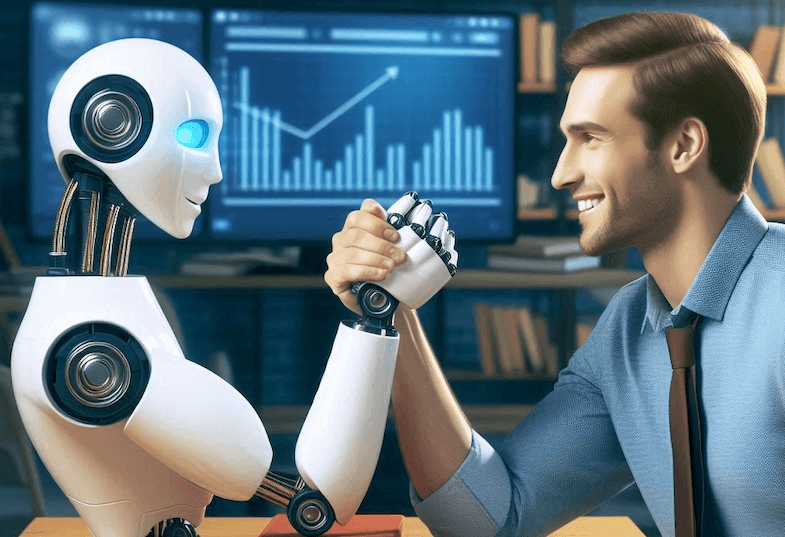
The human touch—our unique ability to empathize, connect, and share experiences—remains beyond what AI can imitate.
AI can’t travel to new places, savor a delicious meal, or describe how a sunset made them feel. These experiences provide depth and authenticity to our writing that AI cannot match.
The future of writing isn’t about AI vs. human writers; it’s about collaboration. Or at least, I hope it is—because if not, we might just be stuck debating who gets to take the literary credit. This partnership has the potential to unlock new creative possibilities and redefine how we communicate.
What’s your take? Are you looking forward to exploring AI in writing, or do you prefer the classic methods?
